



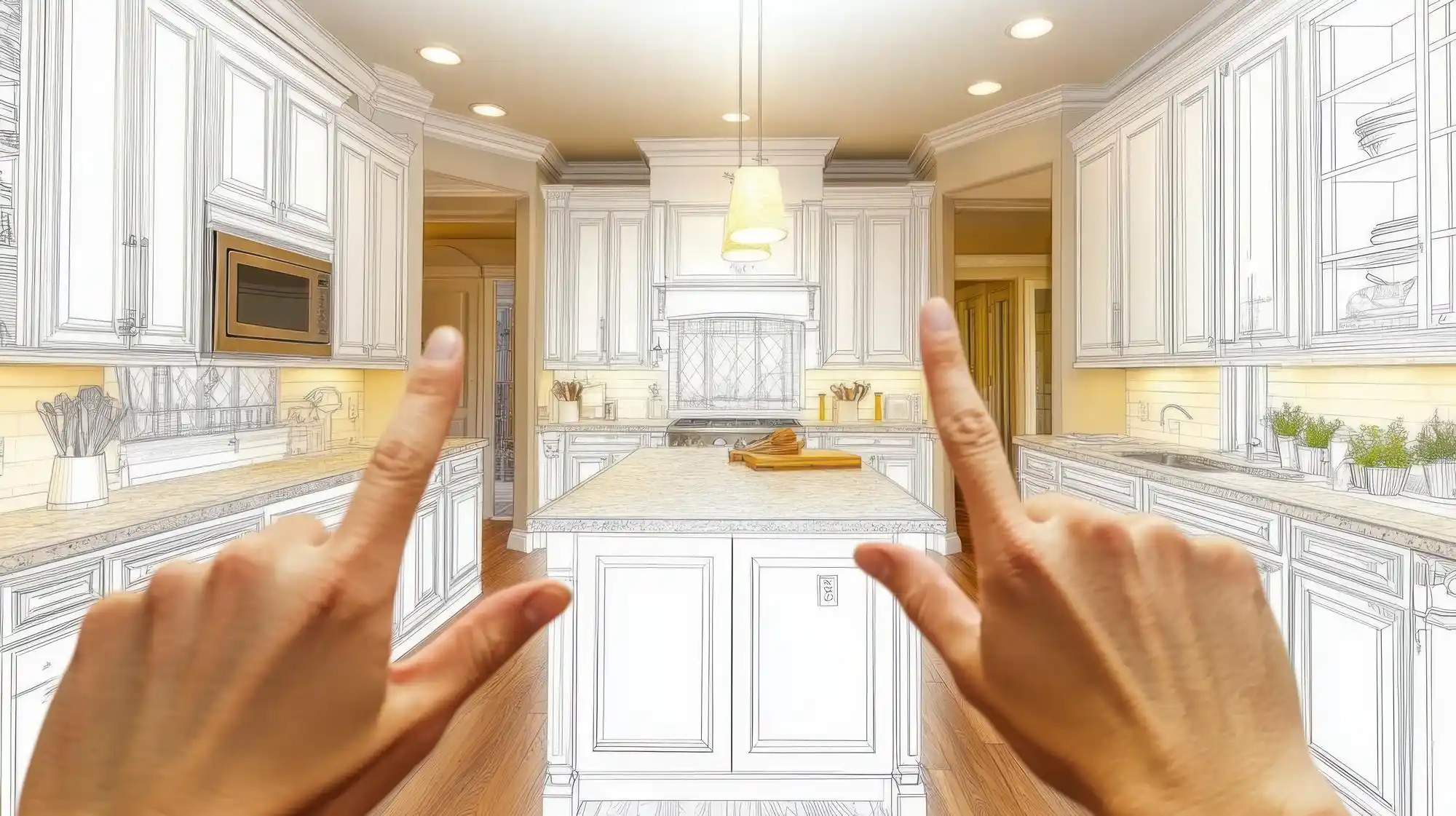
A dated kitchen does not automatically need to be demolished.
Sometimes the layout works, the cabinet boxes are still solid, and the main problem is simply that the room looks tired.
In that situation, a refresh may be enough.
Other kitchens have deeper problems:
- poor circulation,
- limited storage,
- awkward appliance placement,
- failing cabinetry,
- outdated plumbing or electrical systems.
Those problems cannot be solved by replacing cabinet doors and installing a new countertop.
The real difference between a refresh and a remodel is usually scope rather than appearance. A practical kitchen remodel cost guide shows why keeping the existing layout and cabinetry can produce a very different budget from moving plumbing, replacing cabinets, altering walls or rebuilding the room around new appliances.
The smartest choice is not always the biggest project.
It is the project that actually solves the kitchen’s problems.
A Dated Kitchen Does Not Automatically Need to Be Demolished
A kitchen can look old while still functioning well.
Cabinet doors may be dated.
Hardware may feel tired.
Lighting may be poor.
Countertops may no longer fit the homeowner’s style.
If the underlying structure of the kitchen works, replacing selected finishes can produce a significant transformation without rebuilding the entire room.
The first question should therefore be:
Is the problem visual, or is it functional?
That distinction determines most of the project.
When Keeping the Existing Cabinets Makes Sense
Cabinet replacement is one of the largest parts of many kitchen remodels.
Keeping the existing cabinet boxes may make sense when they are:
- structurally sound,
- properly installed,
- reasonably well configured.
New doors, hardware, and finishes can dramatically change their appearance.
But cosmetic improvements only make sense if the underlying cabinets are worth preserving.
- Start With the Cabinet Boxes, Not the Door Style
Before choosing new doors, inspect the cabinets themselves.
Look for:
- water damage,
- sagging shelves,
- loose boxes,
- deteriorated interiors.
If the cabinet structure is failing, investing heavily in new fronts may simply delay inevitable replacement.
A refresh should preserve something that still has useful life.
- Ask Whether the Existing Layout Actually Works
This is the most important question.
Before investing in new doors and countertops, homeowners should decide whether the underlying room already works. Comparing common kitchen layout options can reveal whether the problem is simply outdated finishes or something more fundamental involving circulation, storage, appliance placement or the relationship between the kitchen and adjacent rooms.
If the layout already works, a refresh becomes much more attractive.
If it does not, cosmetic work may become money spent on a configuration that will eventually be replaced.
- New Cabinet Doors Cannot Fix Poor Storage
A kitchen may have plenty of cabinets and still have poor storage.
Problems can include:
- deep inaccessible shelves,
- awkward corner cabinets,
- too few drawers,
- limited pantry space.
New cabinet doors improve appearance.
They do not change how the storage works.
If storage frustration is one of the main reasons for remodeling, new cabinetry may provide much greater long-term value.
- Countertop Replacement Can Trigger Other Work
Replacing countertops sounds simple.
Sometimes it is.
But the project can interact with:
- backsplash,
- sink,
- faucet,
- appliances.
Removing old countertops may damage surrounding finishes.
A new sink may require plumbing adjustments.
A thicker or thinner surface may affect tile transitions.
Even a modest refresh should therefore be planned as a coordinated project.
- Appliance Changes May Expose Layout Problems
New appliances can reveal weaknesses in an older kitchen.
A larger refrigerator may interfere with circulation.
A new range may require different ventilation.
A dishwasher door may conflict with nearby cabinets.
If appliance replacement is part of the project, verify dimensions and clearances before assuming the existing cabinetry can remain unchanged.
- Moving Plumbing Changes the Project Category
Keeping the sink in the same general location is very different from relocating it across the kitchen.
Moving plumbing can involve:
- new supply lines,
- new drains,
- vent changes,
- wall or floor access.
Once major plumbing relocation begins, the project is moving beyond a simple cosmetic refresh.
That does not mean the change is a bad idea.
It simply needs to be budgeted as real construction.
- Wall Removal Is Clearly No Longer a Cosmetic Update
Removing a wall can dramatically improve:
- circulation,
- natural light,
- connection between rooms.
But it may also involve:
- structural engineering,
- framing,
- electrical relocation,
- HVAC changes.
If the homeowner wants a fundamentally different relationship between the kitchen and the rest of the house, a full remodel is usually the more realistic category.
- Flooring Can Complicate a Cabinet-Only Refresh
Existing flooring should be evaluated before cabinetry decisions are finalized.
Some kitchens have flooring installed:
- around cabinets,
- underneath cabinets.
If cabinets are removed later, unfinished areas may be exposed.
This matters when homeowners are considering a partial update today but expect a larger remodel in a few years.
Sometimes it is better to remodel once than patch together several overlapping projects.
- Electrical and Lighting Upgrades Can Sit Between Refresh and Remodel
Lighting can transform a kitchen without changing its layout.
Possible improvements include:
- recessed lighting,
- pendants,
- under-cabinet lighting.
But new lighting may require:
- additional wiring,
- new circuits,
- wall or ceiling access.
Electrical upgrades do not automatically require a complete remodel, but they should be planned before finished surfaces are installed.
- Compare the Cost of Improving Existing Cabinets With Replacing Them Properly
A refresh can save money.
But only if enough of the existing kitchen remains.
If the project includes:
- new doors,
- new drawers,
- interior modifications,
- extensive repairs,
- repainting,
the gap between upgrading existing cabinetry and replacing it may become smaller.
Homeowners should compare both options rather than assume preservation is always cheaper.
When a Cosmetic Kitchen Refresh Is the Smarter Investment
A refresh is often the stronger choice when:
- the layout works,
- cabinet boxes are solid,
- plumbing locations are staying,
- storage is adequate,
- the homeowner mainly wants a visual update.
In this situation, targeted improvements may deliver most of the desired result with less disruption.
When You Are Better Off Remodeling Once Instead of Updating Twice
A full remodel becomes more logical when several major problems exist at the same time.
Examples include:
- poor layout,
- inadequate storage,
- failing cabinets,
- outdated utilities,
- major appliance changes.
Spending money on cosmetic work first can become expensive if those materials are removed during a larger remodel soon afterward.
If the long-term plan already involves structural or layout changes, it may be better to save for the complete project.
A Simple Decision Checklist Before Ordering Anything
Before choosing cabinets, countertops, or tile, ask:
- Are the existing cabinet boxes worth keeping?
- Does the layout work?
- Is storage adequate?
- Are appliances staying in the same locations?
- Is plumbing moving?
- Are walls changing?
- Will flooring need replacement?
- Are major electrical upgrades needed?
If most answers point toward keeping the current structure, a refresh may be enough.
If several answers involve moving systems or changing the layout, the kitchen likely needs a true remodel.
A good kitchen project does not begin with deciding how much to replace.
It begins with understanding what already works.
Preserve the parts that serve the home well.
Change the parts that do not.
That approach usually creates a better result than either extreme: replacing everything unnecessarily or spending money making a dysfunctional kitchen look newer.