


There is something strangely revealing about an empty office. Without the people, computers and daily conversations, the furniture begins to look like a collection of objects that have somehow lost their purpose. Desks stand in neat rows waiting for employees who will never return. Meeting room chairs surround tables where decisions have already been made. Filing cabinets sit against the walls, their drawers containing the remnants of projects completed years ago.
Then somebody arrives with a set of keys and a deadline.
The company is leaving. Perhaps it has moved to larger premises, perhaps its staff now work remotely, or perhaps the business has closed altogether. Whatever the circumstances, the landlord wants the space returned, the electricity account needs closing and the furniture has to go somewhere.
It is at this point that a surprisingly complicated question emerges: what actually happens to all those desks, chairs, cabinets and cupboards?
For a small business, the problem might involve half a dozen workstations and a meeting table. For a larger organisation, it can mean hundreds of individual items spread across several floors. Some furniture may be almost new, while other pieces have survived multiple office refurbishments and bear the evidence of years of use.
The instinctive response is often to treat everything left behind as waste. But office furniture occupies an awkward position between a valuable business asset and something nobody particularly wants.
A desk that cost several hundred pounds when purchased may have little resale value once it needs dismantling, transporting and storing. A chair that remains perfectly comfortable may no longer match the company’s new interior design. A filing cabinet may be structurally sound but almost irrelevant to a business that has moved its records online.
The furniture hasn’t necessarily stopped working. The business has simply stopped needing it.
Understanding that distinction is increasingly important for companies trying to manage relocation costs, reduce unnecessary waste and leave commercial premises in an appropriate condition.
The Furniture That Doesn’t Fit the Future
Imagine a Glasgow company that has occupied the same office for fifteen years. When it first moved in, the directors purchased a mixture of desks, chairs and storage units. As the business expanded, more furniture was added. Some came from office suppliers, while other pieces were acquired second-hand or inherited from previous tenants.
Over time, the layout became a patchwork of different styles.
Now the company is moving into a modern office with smaller workstations, shared meeting areas and fewer permanent desks. Management has invested in furniture designed specifically for the new premises.
The old furniture is no longer required.
From a business perspective, the decision may make perfect sense. Moving bulky desks that do not fit the new layout could cost more than they are worth. Storage cabinets may be unnecessary, and older chairs may not meet the organisation’s current requirements.
But when the relocation team looks around the old office, it faces a problem that cannot be solved by simply ordering new furniture.
Everything left behind still has to be dealt with.
This is where businesses sometimes discover that the value of furniture is more complicated than its original purchase price.
A desk might appear to be worth £100 on the second-hand market, but that figure doesn’t account for dismantling, collection, transport or the time involved in finding a buyer. If the business has fifty desks to remove before the lease ends, selling them individually may be impractical.
Office furniture is also often designed for particular layouts. Large modular desks may be difficult to reuse in smaller premises, while fitted storage systems can require considerable work to remove without damage.
Even when an item is in good condition, its usefulness depends on whether somebody else wants it, can collect it and has somewhere suitable to put it.
That doesn’t mean resale or reuse should be dismissed. It means those options need to be considered early enough to be realistic.
A business that begins planning several months before a relocation has time to explore whether furniture can be transferred, sold or donated. A company that leaves the decision until the final week may have little choice but to arrange removal within a tight deadline.
The difference is not necessarily environmental awareness or good intentions. Often, it is simply time.
Why Reuse Is More Complicated Than It Sounds
In principle, keeping usable office furniture in circulation is an attractive idea.
A sturdy meeting table doesn’t become useless because the company that purchased it has moved. An adjustable desk may have years of service remaining, and a well-maintained storage cabinet could be useful in another workplace.
Reuse can reduce the need for new products and avoid sending serviceable materials into waste streams unnecessarily.
Yet anyone who has tried giving away a large piece of furniture will know that finding a new owner can be surprisingly difficult.
The problem becomes greater when dozens of identical items need to leave a building at once.
A charity or community organisation may welcome a few desks but have no space for thirty. A small business might be interested in office chairs but unable to arrange collection. A second-hand furniture dealer may only accept items that are commercially viable to refurbish and resell.
Condition matters too. Furniture that looks acceptable in a busy office may reveal considerable wear when examined closely. Chairs may have damaged mechanisms, desks may be missing components and cabinets may have locks for which nobody can find the keys.
Some upholstered furniture is also subject to fire-safety requirements, and suitability for resale or donation cannot simply be assumed.
For a business trying to manage a responsible clearance, the practical approach is to assess the furniture before the premises need to be emptied.
Items that are likely to be reused can be identified and offered through suitable channels. Anything damaged or unsuitable can be considered for recycling or appropriate disposal.
This is more effective than waiting until removal day and hoping somebody will take whatever remains.
There is also a useful distinction between donating furniture and transferring a problem to someone else. An organisation receiving a desk needs to know that it is safe, functional and appropriate for its intended use.
Giving away damaged or unsuitable equipment simply moves the burden of disposal from one organisation to another.
Responsible reuse requires a genuine recipient and a realistic prospect that the item will continue to serve a useful purpose.
For businesses with large quantities of furniture, it may be worthwhile obtaining advice from organisations that specialise in second-hand office equipment. However, the available options depend on the type, condition and quantity of the furniture, as well as local demand.
The Hidden Cost of Getting Furniture Out of a Building
One of the reasons unwanted office furniture becomes such a challenge is that removing it can be more difficult than installing it.
When a company moves into new premises, furniture deliveries are usually planned. Items arrive packaged, installers know the building layout and the work is coordinated with the office fit-out.
Years later, the situation may be very different.
Desks have been connected together, storage units have been fixed to walls and additional furniture has been squeezed into spaces that were never intended for it.
The building itself may also impose restrictions.
An office in central Glasgow might have a service lift that can only be booked at certain times. The loading bay may be shared with other businesses, and access through reception may need to be agreed with building management.
Large furniture may have to be dismantled before it can be removed safely.
In older commercial properties, staircases and narrow corridors can make the work particularly awkward. A desk that was assembled inside an office may not fit through the doorway in one piece.
These details are easy to overlook when management is concentrating on the new premises.
They become much harder to ignore when the old office must be cleared before the end of the lease.
There is also the question of who should perform the work.
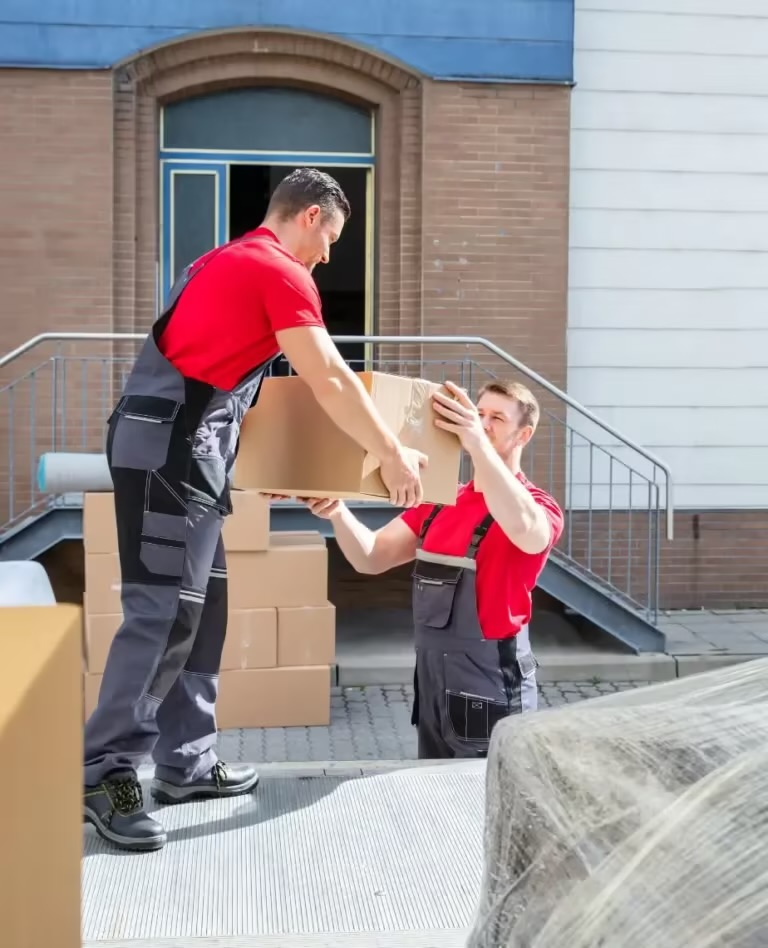
Asking employees to help move a few lightweight personal belongings may be reasonable in some circumstances. Expecting office staff to dismantle heavy furniture, carry filing cabinets downstairs or load large vehicles is another matter.
Manual handling and workplace safety responsibilities still apply.
The physical work needs to be assessed and organised appropriately, particularly where heavy objects, awkward access or substantial quantities of furniture are involved.
For businesses facing these challenges, professional commercial clearance can provide a practical way to remove unwanted contents without diverting staff from their normal responsibilities.
In Glasgow, companies such as MrMoovah, which provides house and commercial clearance services offer an option for businesses dealing with unwanted furniture and other contents when premises are being vacated or reorganised.
The important thing is to establish the scope of the work in advance. A company should know which furniture is being removed, whether dismantling is required and how access to the building will be managed.
That preparation can prevent a straightforward clearance from becoming a disruptive last-minute exercise.
When Office Furniture Becomes Commercial Waste
Not every desk or chair will find a second owner.
Some items are too damaged to reuse. Others are unsuitable for the available resale or donation channels. In certain cases, the cost and difficulty of moving furniture may make recovery impractical.
At that point, the question changes from finding a new use to ensuring the materials are handled appropriately.
Office furniture can contain a mixture of wood, metal, plastic, foam, fabric and composite materials. These components may require different treatment depending on their condition and the facilities available.
A metal filing cabinet may be relatively straightforward to direct towards an appropriate recycling route. A large upholstered office chair can be more complicated because it contains several different materials, and certain components may be subject to specific waste requirements.
The fact that furniture came from an office rather than a household also matters.
Businesses have legal responsibilities for the waste they produce. In Scotland, commercial waste must be managed in accordance with applicable waste legislation and duty-of-care requirements.
This includes ensuring that waste is transferred to appropriately authorised operators and that relevant records are maintained where required.
The Scottish Environment Protection Agency, or SEPA, provides information about waste management and carrier authorisation.
Businesses should be cautious about assuming that the cheapest collection service is automatically the best choice. It is worth asking what materials can be accepted, whether specialist handling is required and how the waste will be managed after collection.
These questions are particularly relevant when furniture is being removed alongside electrical equipment, confidential paperwork or other business contents.
A clearance involving desks and chairs is not necessarily the same as one involving computers, batteries, chemicals or specialised industrial equipment.
Different materials can carry different obligations.
Businesses that understand those distinctions are better placed to organise clearance responsibly and avoid problems later.
The Problem With Old Computers and Confidential Records
Office closures and relocations rarely involve furniture alone.
A desk may be empty, but the storage cupboard beside it could contain obsolete computers, monitors, printers and boxes of paperwork.
These items require a different level of attention.
A computer that no longer powers on may still contain a hard drive holding customer records, financial information or employee details. Printers and other devices may also retain information.
Simply placing such equipment alongside unwanted furniture is not an adequate approach to data protection.
Businesses need appropriate arrangements for data erasure or destruction, taking account of their obligations under UK data protection law.
Where equipment is intended for reuse, secure data removal may allow it to remain useful. Where it is no longer suitable, appropriate recycling or disposal routes should be considered.
Confidential paper records also need to be assessed before removal. Some documents may need to be retained for legal or operational reasons, while others may require secure destruction.
The same applies to equipment that belongs to a leasing company or another third party.
A business should establish ownership before deciding what can be sold, donated or disposed of.
This is why an inventory can be valuable during a relocation or closure. It doesn’t need to be unnecessarily complicated, but it should distinguish ordinary furniture from items that require additional decisions.
A company that treats every remaining object as general waste risks overlooking responsibilities that continue long after it leaves the premises.
What a Business Closure Leaves Behind
The circumstances surrounding a business closure can make clearance particularly difficult.
When a successful company relocates, there is usually a management team planning the move and a continuing business able to make decisions.
When a business closes because of financial difficulties, the situation may be much less straightforward.
Furniture and equipment may form part of the company’s assets. Some items may be subject to finance agreements, while creditors or insolvency practitioners may have an interest in what happens to them.
Directors and landlords should not assume that the contents of a closed business can simply be removed without considering ownership and legal authority.
Where a company enters a formal insolvency process, the appropriate office-holder may need to make decisions about its assets.
For landlords, the presence of abandoned-looking furniture can be frustrating, particularly if the premises are needed for a new tenant. However, the legal position must be established before disposing of property that may belong to someone else.
These situations illustrate why commercial clearance is not always just a logistical service.
It often sits at the end of a chain of commercial and legal decisions.
Once the relevant authority has been established and assets have been dealt with appropriately, the remaining contents can be assessed for removal.
But attempting to skip those earlier steps can create complications far more serious than the inconvenience of a full office.
A Second Life for Commercial Premises
When an office is finally cleared, the building often looks very different.
Without desks, chairs and storage units, the available floor area becomes easier to appreciate. The layout may seem more flexible, and features previously hidden by furniture become visible.
For a landlord or property manager, this can be an important stage in preparing the premises for another occupier.
A cleared office can be inspected more easily. Maintenance issues may become apparent, and contractors can assess whether alterations or refurbishment are required.
For a new tenant, the empty space offers an opportunity to imagine a different arrangement.
The room that once contained a bank of desks might become a meeting area. A storage room could be incorporated into the main office. A business with different working practices may use the premises in an entirely new way.
This process is familiar across Glasgow, where commercial buildings are continually adapted to suit changing requirements.
Older offices are refurbished, businesses consolidate their accommodation and premises are reorganised as working practices evolve.
The furniture left behind by one organisation may be unsuitable for the next, even when both businesses occupy the same building.
That doesn’t make the previous furniture worthless. It simply reflects the fact that commercial spaces change along with the businesses using them.
There is an interesting contrast here.
For the departing company, clearance represents the end of a chapter. For the landlord, it may be part of preparing the property for its next tenant. For the incoming business, the empty office is the beginning of something new.
The same physical space can represent three very different stages of commercial life.
Why Planning Makes the Difference
Perhaps the most important lesson from office closures and relocations is that unwanted furniture should not be left until the final few days.
The earlier a business understands what it intends to retain, the more options it has.
Furniture that will be reused can be included in the relocation plan. Items suitable for resale can be assessed while there is still time to find buyers. Donations can be explored without the pressure of an immediate deadline.
The remaining contents can then be considered for professional clearance and appropriate waste management.
This approach also makes costs easier to understand.
A business can obtain quotations based on the actual volume and type of furniture rather than relying on rough estimates. Access arrangements can be discussed with building management, and the work can be scheduled around operational requirements.
For companies with several departments, early planning also reduces the risk of removing something that is still needed.
An apparently redundant cabinet might contain archived records. A desk scheduled for disposal may belong to another team. A storage unit could hold equipment that needs to be transferred to the new premises.
These details are much easier to resolve before removal begins.
It is also worth thinking about how the business will manage furniture in future.
Organisations that keep track of their assets and review unused equipment periodically may find later relocations easier to manage.
Rather than allowing broken chairs and obsolete cabinets to accumulate in spare rooms, they can make decisions while the quantities remain manageable.
This doesn’t require a complicated system. It simply means recognising that furniture has a lifecycle and that disposal is part of managing it.
The Last Desk Out of the Door
By the time the final desk leaves an office, the business has usually moved on in more ways than one.
Employees may already be working from new premises. Customers have been told about the change of address, suppliers have updated their records and the old building is beginning to feel unfamiliar.
The remaining furniture can seem like an insignificant detail compared with everything else that has happened.
Yet those desks and chairs represent years of investment, work and changing business needs.
Some may continue to be useful elsewhere. Others may be broken down into materials that can be recovered. A proportion will require disposal through appropriate waste routes.
What happens to them depends largely on the decisions made before the office was emptied.
A rushed clearance can turn usable equipment into a logistical problem. A planned approach gives businesses more opportunity to consider reuse, control costs and meet their responsibilities.
For Glasgow companies, the issue is particularly relevant because commercial premises vary so widely. A small office above a shop, a modern city-centre workplace and a larger business unit may contain similar furniture but present very different removal challenges.
There is no single solution that suits every building or every business.
What remains consistent is the need to think beyond the new premises and consider what happens to the old ones.
Relocating a company is about more than moving the people and equipment it wants to keep. Closing a business involves more than turning off the lights and handing back the keys.
In both cases, the contents left behind need a considered destination.
And when the final chair has been carried out, the last cabinet removed and the doors closed, the building is ready to begin its next working life.