



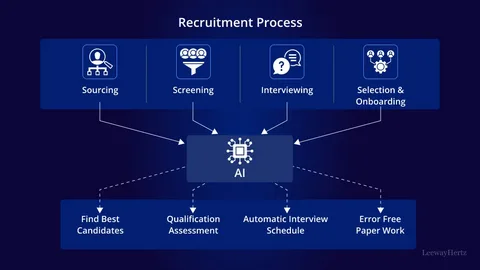
In today’s competitive job market, the difference between hiring a top performer and a costly mismatch often comes down to data. Traditional hiring methods—relying heavily on resumes, interviews, and intuition—are rapidly giving way to smarter, data-driven approaches. Organizations that adopt assessment technology are not only improving hiring accuracy but also creating stronger, more engaged teams.
Forward-thinking HR leaders recognize that successful talent strategies aren’t built on gut feelings—they’re built on actionable insights.
The Evolution Toward Predictive Hiring
Over the past decade, predictive hiring has shifted from an emerging concept to a core component of modern talent acquisition. It combines behavioral science, psychometrics, and analytics to forecast how candidates will perform, communicate, and adapt within an organization.
Rather than focusing on experience alone, predictive assessments evaluate potential—the combination of skills, cognitive ability, and cultural alignment that drives long-term success. This data-centric approach allows HR professionals to make smarter hiring decisions, reduce turnover, and improve performance outcomes.
For instance, two candidates may appear equally qualified on paper. Yet one may excel in problem-solving and collaboration—traits that determine long-term value in a fast-paced workplace. Assessments help uncover those distinctions before an offer is made.
Why Data-Driven Assessments Matter
The widespread adoption of hybrid and remote work models has made evaluating soft skills, adaptability, and emotional intelligence more important than ever. Relying solely on interviews is no longer enough. Assessment tools provide an objective way to measure these critical attributes, helping companies identify candidates who can thrive in evolving environments.
Key advantages include:
- Objective decision-making: Reduces bias by relying on measurable, validated data.
- Higher quality of hire: Identifies candidates whose abilities align with organizational goals.
- Reduced turnover: Ensures stronger alignment between role expectations and employee strengths.
- Faster hiring cycles: Streamlines candidate evaluation while maintaining accuracy and fairness.
By incorporating these insights into the hiring process, companies transform recruitment from a reactive process into a proactive, evidence-driven strategy.
Building a Smarter Hiring Framework
Integrating data-driven assessments into your hiring process requires a structured approach that connects analytics to performance outcomes. Successful frameworks include:
- Defining Role Competencies: Identify the skills, traits, and values that predict top performance.
- Choosing Validated Tools: Use scientifically backed assessments that are reliable and job-relevant.
- Combining Data Streams: Integrate assessment results with retention and performance data.
- Continuous Optimization: Review outcomes regularly to ensure ongoing accuracy and relevance.
This approach ensures that hiring decisions are consistent, predictive, and scalable—especially for organizations managing large or diverse workforces.
The Role of Trusted HR Assessment Partners
The quality of assessment outcomes depends heavily on the tools and expertise behind them. Partnering with experienced providers helps ensure accuracy, compliance, and practical application. These experts bring decades of research and experience in designing systems that align with real-world business needs.
For organizations seeking proven, research-based tools to evaluate and select top talent, exploring HR assessment solutions from AlignMark can be an excellent starting point. These solutions provide companies with the insights needed to identify high-performing candidates, streamline their hiring process, and enhance employee development across the organization.
Future Trends: AI, Continuous Feedback, and Talent Analytics
The future of hiring and development lies in continuous assessment—evaluating employees not only before hire but throughout their careers. Artificial intelligence and predictive analytics will further personalize talent management, allowing organizations to identify emerging leaders and skill gaps in real time.
As assessment data integrates with performance management systems, HR teams will gain a holistic view of workforce potential. This will enable more strategic decisions around training, succession planning, and long-term workforce design.
Conclusion: From Intuition to Insight
The era of instinct-based hiring is coming to an end. Data-driven assessments are redefining how organizations attract, evaluate, and retain talent. By leveraging validated tools and analytics, companies can make smarter, faster, and fairer decisions—building teams that are both capable and aligned with business goals.
For HR leaders committed to strategic growth, partnering with a trusted provider of scientifically grounded assessments ensures long-term success. When insight replaces instinct, hiring becomes more than a process—it becomes a competitive advantage.
