



Introduction
School administrators and educational leaders are tasked with juggling complex responsibilities—policy development, curriculum oversight, staff management, and strategic planning. In 2024, generative AI is emerging as a powerful tool to reduce administrative burdens, streamline workflow ai tutors, and enhance decision-making. By automating repetitive tasks, generating reports, and supporting strategic initiatives, AI allows leaders to focus on high-impact activities that directly benefit students and staff.
Key Applications of Generative AI in Administration
1. Policy Drafting and Review
Generative AI can assist administrators in:
- Drafting policies, procedures, and guidelines efficiently
- Reviewing existing documents for clarity, compliance, and consistency
- Generating policy summaries for staff and stakeholders
This ensures documents are comprehensive, professional, and aligned with institutional standards while saving time.
2. Strategic Planning and Scenario Modeling
AI tools can analyze large datasets to inform planning and decision-making:
- Identify trends in student performance, attendance, or resource utilization
- Model potential outcomes of policy changes or budget allocations
- Generate alternative strategies based on predictive analytics
By providing data-driven insights, AI supports more informed and proactive leadership decisions.
3. Meeting and Report Automation
Administrators often spend hours preparing meeting agendas, minutes, and reports. AI can:
- Draft agendas based on prior meetings or priorities
- Summarize key points from discussions and emails
- Generate performance or compliance reports automatically
This reduces administrative overhead and ensures timely communication.
4. Communication and Stakeholder Engagement
Generative AI enhances messaging to staff, parents, and boards by:
- Producing newsletters, announcements, or policy updates
- Tailoring communication for different audiences while maintaining tone and clarity
- Automating responses to frequently asked questions or inquiries
Effective communication strengthens relationships and ensures transparency.
5. Workflow Optimization and Task Management
AI can identify bottlenecks, assign tasks, and monitor progress in administrative operations:
- Streamline scheduling and resource allocation
- Provide reminders for deadlines or compliance requirements
- Suggest workflow improvements based on patterns and historical data
This promotes efficiency and reduces the risk of human error.
Benefits of AI Integration for Leadership
- Time Savings: Automates repetitive, low-value tasks, freeing leaders to focus on strategic priorities.
- Enhanced Accuracy: Reduces errors in reports, policy documents, and communications.
- Data-Driven Decisions: AI analyzes complex data sets, offering insights that might be missed manually.
- Consistency and Standardization: Ensures policies, reports, and communications maintain a uniform quality and tone.
- Proactive Management: Predictive analytics help anticipate challenges and plan interventions in advance.
Best Practices for Administrators Using AI
- Maintain Oversight: AI should assist decision-making, not replace human judgment.
- Ensure Compliance: Verify AI-generated policies and communications align with legal and regulatory standards.
- Train Staff: Educate administrative teams on effectively using AI tools for planning, reporting, and communication.
- Data Privacy and Security: Protect sensitive student and staff information by choosing secure AI platforms.
- Iterative Implementation: Start with smaller, well-defined tasks and gradually expand AI use across broader administrative functions.
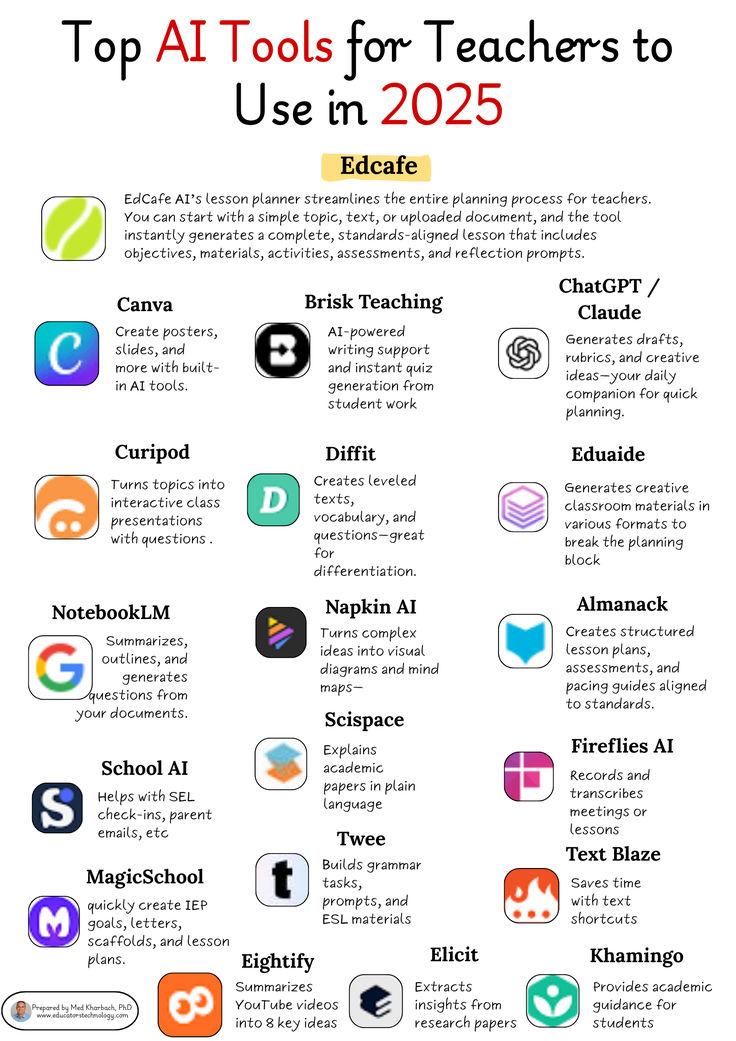
Recommended Generative AI Tools for Administrators
- ChatGPT Enterprise: Drafts documents, generates reports, and supports strategic planning discussions.
- Notion AI: Organizes notes, tracks tasks, and synthesizes meeting outcomes.
- Microsoft Copilot for Office: Automates document creation, email drafting, and spreadsheet analysis.
- Tableau AI: Visualizes data trends for policy decisions and operational planning.
Conclusion
Generative AI is redefining administrative leadership in education by streamlining policy development, planning, and workflow management. By integrating AI tools, administrators in 2025 can reduce time spent on routine tasks, improve accuracy, and make data-driven decisions that benefit staff and students alike. With thoughtful implementation, AI empowers leaders to focus on strategic initiatives, foster proactive management, and enhance overall institutional effectiveness—making technology an indispensable partner in modern educational leadership.